

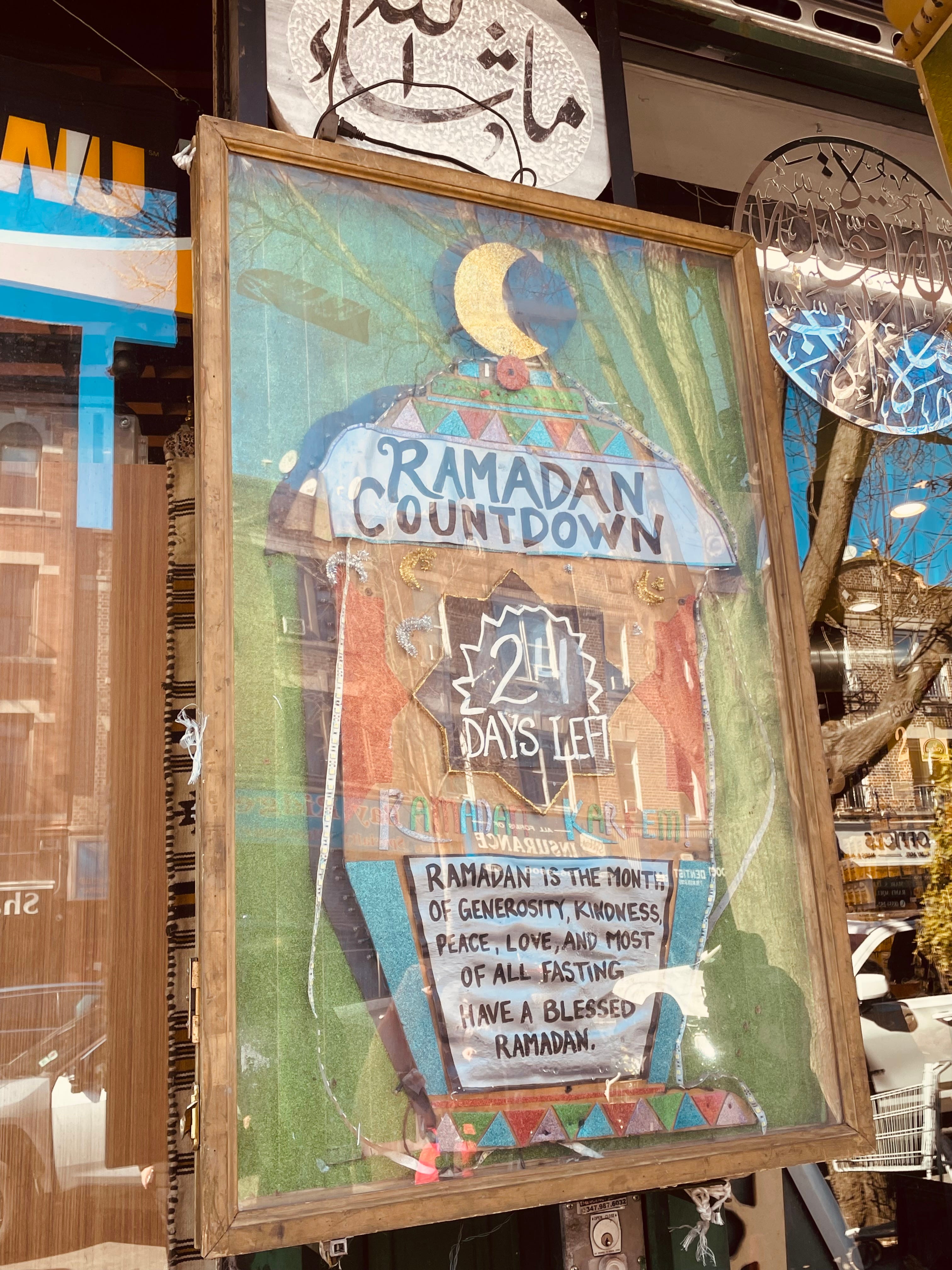
Is Islam “compatible” with the American, or more generally Western, way of life? The question is an old one, and it can often feel as if the topic has already been discussed to death.
On the one hand, progressives argue that any tendency by Muslims to hold problematic political or social beliefs can be explained away by present Islamophobia or past colonialist oppression. On the other, prominent critics of Islam claim that the religion’s core doctrines demand, if not actual terroristic violence, at least an attitude of skeptical detachment from the principles of religious liberty and personal freedom upheld by the Constitution and by the laws and customs of other Western nations. Muslims may accept freedom and pluralism pragmatically—runs the most plausible version of this critique, but they cannot accept it as good in principle—as the best political regime, and therefore cannot be trusted not to seek to undermine these values as and when circumstances permit.
What neither side in this argument often cares to remember is that precisely the same debate once raged about another American religion, one that today is more likely to be identified with conservatism and patriotism than with the emancipation of marginalized minorities. This religion is, of course, the Roman Catholic Church.
The convenience of liberty
In 1949, Paul Blanshard’s American Freedom and Catholic Power asserted that Catholicism was an “undemocratic system of alien control.” Catholics, held Blanshard, were loyal to a foreign power, incorrigibly separatist, impossible to assimilate, and slyly called for religious freedom while they were still a minority…but with the intention of denying that same freedom to others once they came into power. Does any of this sound familiar?
Blanshard, of course, was a hack, and his work was hysterical and hyperbolic. Yet, like some of today’s hysterical critics of Islam, his diatribe contained a grain of truth. Until the mid-1960s, the Vatican’s official teaching held that pluralism and religious liberty were an acceptable compromise but that the ideal political regime was a confessional state that would severely restrict the public propagation of non-Catholic religions. Similarly, today, conservative Sunni Muslims (that is, most Muslims) are implicitly committed to the view that the conclusions of the medieval legal schools are binding on Muslims in the present.
These rulings, of course, include famously illiberal doctrines like the execution of apostates and the banning of public proselytism by non-Muslim faiths. Thus, significant minorities of Muslims favor killing apostates, at least in principle, even in many Western countries with all their countervailing pressures toward secularization and tolerance. In Muslim-majority countries, the figure is often well above 50%.
Today, Blanshard-style anti-Catholicism is a thing of the past, and the vast majority of American Catholics (marginal “integralist” theocrats notwithstanding) enthusiastically support American principles of religious liberty. What changed?
The simple answer is that Catholics experienced the blessings of American liberty, and came to believe that the Church could flourish better under a free state than under an authoritarian confessional one. The Vatican’s anti-liberal teaching was forged in a Europe in which liberalism more often meant Robespierre’s desire to replace Catholicism with a deist “cult of the supreme being” or Voltaire’s call to écrasez l’infâme than any kind of principled commitment to religious tolerance.
By contrast, the Church’s evident flourishing under American liberalism soon gave rise to an “Americanist” movement among bishops who challenged the traditional teaching that a confessional state would be the ideal regime. (The term “Americanist” was coined by Leo XIII to denote a set of heretical and exaggeratedly liberal beliefs purportedly held by some American Catholics, but I use the term to represent the way that a love of the American experience drove the legitimate movement toward Catholic political liberalism).
By the 1950s, latter-day Americanists like John Courtney Murray had gained the ear of the Vatican. Murray’s argument, that the necessarily free character of true religious faith required a state that protected religious liberty for persons of all confessions or none, eventually carried the day in the Second Vatican Council’s 1965 Dignitatis Humanae, which put to bed the old authoritarian position once and for all.
Most Muslims today live under similar conditions to nineteenth-century European Catholics. We often speak in lurid terms about the authoritarian Islamist movements that have gained considerable traction in many Muslim nations. Yet we forget that the salient alternative for these countries, as Notre Dame’s Daniel Philpott has shown, is usually not American-style pluralism but Voltaire-style coercive secularism. Muslim states are trapped between the Scylla of radical Islamism and the Charybdis of authoritarian secularism.1
Muslims, then, struggle to see religious liberty as a force for good when their liberty to practice their faith is often threatened by liberals claiming to act in the name of a “higher” form of freedom. If this situation is to change, the change will come from America, perhaps with other English-speaking nations playing a supportive part.
Already, American Muslims have strikingly more liberal attitudes on a range of issues than any other Muslim community in the world, including those elsewhere in the West. Some American Muslim intellectuals are starting to become nascent Americanists, too. Notably, the Muslim scholar Hamza Yusuf has engaged in deep intellectual dialogue with the Catholic natural theorist Robert P. George, with both seeming to agree that the need to protect religion itself from the snares of hypocrisy and blind conformity is the best argument for upholding equal religious liberty for all.
A Muslim version of Vatican II is, of course, impossible: There is no Muslim Vatican, or equivalent centralized hierarchy capable of directing Muslim belief. Yet if these Muslim Americanists are to succeed in following Murray’s footsteps, a major Islamic doctrine will need to be reinterpreted—or rather, I would argue, interpreted in line with Islam’s real nature—and this interpretation spread organically among Muslim scholars and lay people.2
Getting to the root of Islamic teaching
The crucial point is that sharia needs to be conceived of in at least partly teleological terms. Voluntarism—the view that morality, which is exhausted by God’s revealed law, reflects only his inscrutable will rather than being a means to realize at least partially temporal purposes—is an idea with truly pernicious consequences: It is the implicit intellectual scaffolding behind every Muslim argument against the possibility of reforming medieval jurisprudence. If voluntarism is true, only narrowly textual forms of legal hermeneutics are possible, and there is no case for revising medieval rulings since the peremptory and arbitrary Divine will is not subject to historical variation.
Voluntarism is also, practically, almost impossible for Muslims to believe consistently. If true, voluntarism would imply that, say, the perpetrators of the Uighur persecutions are not responsible for their crimes: Not being Muslim, and not having access to the revealed law that is the total of morality, how could they be expected to know that torturing people in concentration camps is bad?
Fortunately for those of us inclined to reject this repugnant conclusion, the alternative view—that large parts of sharia in fact serve discernible worldly purposes and can therefore be revised if the traditional rulings no longer serve those purposes—is deeply rooted in the Islamic intellectual tradition. According to the contemporary scholar Ramon Harvey, the doctrine of teleological sharia was central to the work of the 9th-10th century theologian Abu Mansur al-Maturidi. Maturidi, the formulator of one of the two dominant schools of Sunni theology, took precisely the anti-voluntarist view discussed above: That sharia rulings can and must be derived on the basis of the purposes they serve.
What are these purposes? The standard list, often attributed to the 15th-century scholar Abu Ishaq al-Shatibi, enumerates sharia’s goals as the protection of life, religion, family, intellect, and wealth. The question for Americanist Muslims, therefore, is whether medieval rulings on apostasy and proselytization still serve the purpose of protecting religion.
Arguably, a powerful reason why they might no longer serve this purpose can be derived from the work of a man who was essentially the Muslim equivalent of Aquinas: The 11th-century philosopher and theologian Al Ghazali, a thinker seen as so central to defining Sunni orthodoxy that he is known as the hujjat al-Islam or “proof of Islam”.
According to Ghazali, perhaps surprisingly, salvation will encompass not just Muslims but “most of the Christians of Byzantium”. And this at a time when the Muslim world was presumed to be either at war with Christian states or enjoying a temporary and provisional truce. Why the generosity?
The simple answer is that, for Ghazali, most non-Muslims are not culpable for their disbelief: either they haven’t heard of Islam, they haven’t heard the truth about it, or they have tried to investigate but have not yet had the time to become sure of Islam’s truth. In other words, it is a person’s inner state that determines the (dis)value of their faith, not their outward confession. It is a man’s goodwill that earns him salvation, not whether he is officially registered as a Muslim (note that affirming this does not compromise the claim that Islam represents the whole truth and exclusive basis of salvation).
Thus, forcing someone, on pain of death, to remain outwardly a Muslim when he is not inwardly one cannot improve his spiritual state. While it is conceivable that repeated pretense at Muslimness—combined with persuasive exhortation from the state—might eventually lead to real faith taking root, this argument would prove too much: for it would just as well apply to forced conversions, not just forced retention of nominal Muslims; and forced conversions were always rejected by the same scholarly mainstream that once called for slaying apostates. The best case against medieval apostasy laws, then, turns out to be a version of the “fusionist” thesis of the conservative thinker Frank Meyer: Coerced faith, like coerced virtue, is only a parody of itself.
Thus, the purpose of the medieval rulings on apostasy was not, it seems, to protect religion, but to protect human life in a world in which changing one’s religion often amounted to treasonously switching sides in a war. Since, thank God, we no longer live in that world, the traditional ruling, on the Maturidi-teleological account, no longer stands.
Similar arguments could be made regarding medieval positions on proselytization or the civil rights of non-Muslims. The crucial point, however, is that the work of Islamic “reform” (or, more accurately, the re-presentation of the tradition in line with its true nature) is already happening—and it is happening most prominently in America, in dialogue with Catholics and other Christians who went through a similar process in the twentieth century.
The bright future of Americanist Islam
Americanist Islam is here, and this is a good thing for America and a good thing for Islam. Christians, Jews, and other Americans should welcome this fact and should continue to engage with Muslim scholars who are promoting it. The progressive view, that Muslims need to be perpetually liberated from the oppressive colonialist cis-het-patriarchy, is blind to the fact that Islam is not an identity but a set of metaphysical claims about God and man. The reactionary, pseudo-traditionalist view that figures Islam as an un-reformable enemy of America and of the West is equally flawed, for it ironically evinces a disturbing lack of faith in America’s power to transform man’s relationship to God in the direction of authentic faith rather than blind conformity.
The same views of God and man that now underpin Islamic radicalism were once held by the Catholic hierarchy, too. And it was the experience of American liberty that led them to change. Faith in the American project should yield optimism about the prospects of an Americanist Islam.
Often promoted by an elite class often steeped in Francophone philosophy and determined to trample on religious freedom whenever it conflicts with laïc campaigns against “backward” and superstitious faith.
I am not a qualified Islamic theologian, so the following is to be taken with at least a pinch of salt. My case for the possibility, indeed the deep desirability, of the necessary reinterpretations is conjectural and tentative, to be completed by scholars better than I at a later date. Nevertheless, the following should provide a useful promissory note for the intellectual work that Muslim Americanists will need to do.
