
Bring Back Intergenerational Merriment
you should have fun with old people

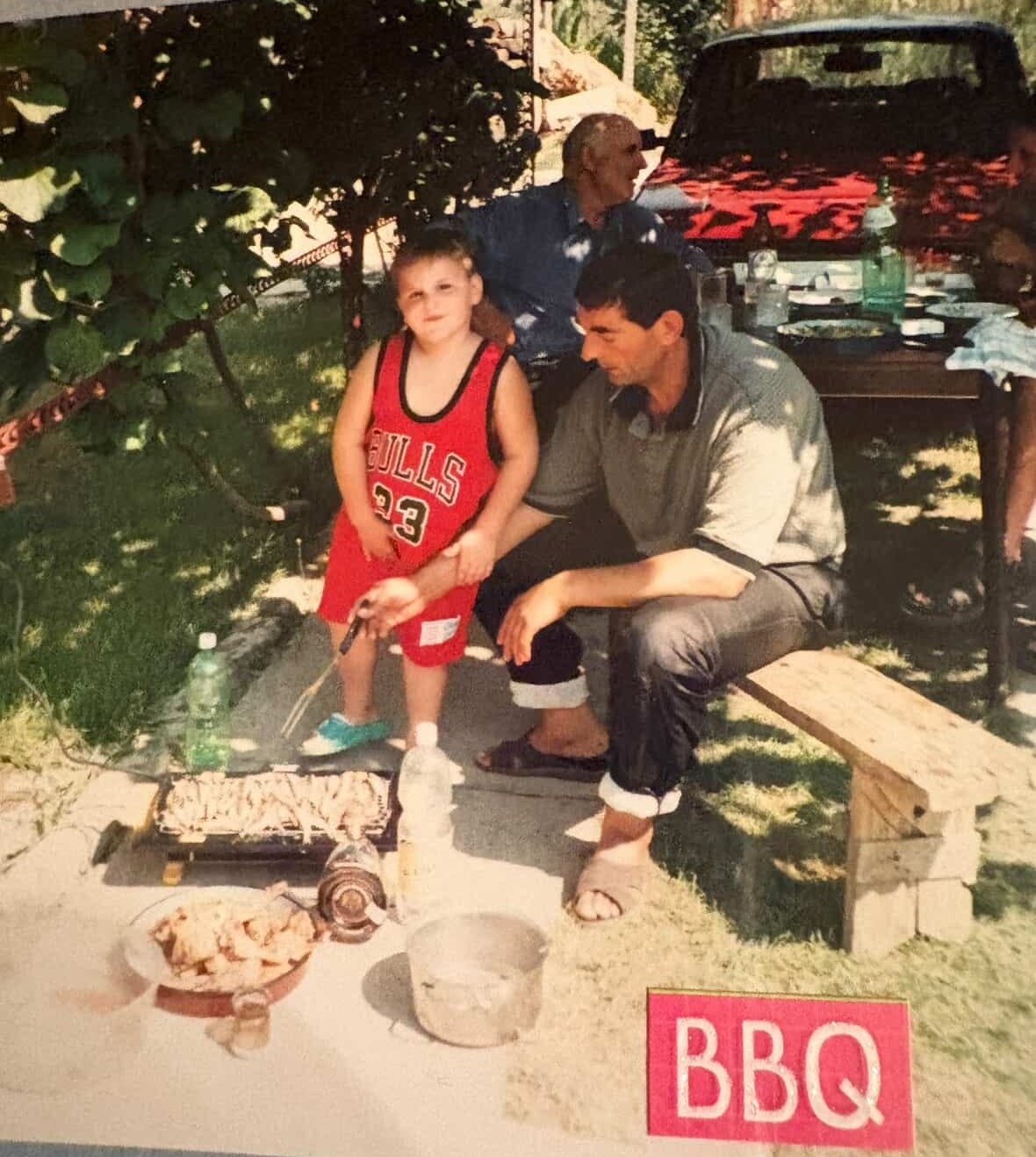
When I was young, I wanted to be old.
For the record, I am still young, and I am still enjoying my youth. And it took a while to get here.
As a teenager, I had no concept of youth, and even less use for it. I wanted to be an old man, swinging in my rocking chair, smoking my pipe as I watch my grandchildren play. It only seemed natural. Who would not want this?
I remember my teachers. I remember how in grade school they told my mother, He’s very polite, very mature. I’ve never seen a child like him. And in high school, they told me, You’ve always been so grown up. So adult. In those days I thought my elders understood me more than my peers. In them was true camaraderie, trust, respect. In retrospect, it makes sense. Of course my empathic English and history teachers understood me: it was their job. And thank God I had those adults in my life.
I was (and still am) a sensitive and introspective person, and in those days, I was sometimes very lonely. Naturally, I gravitated to older people. Older people have always been an important part of my life.
At the 1995 Yale Political Union debate Women are Better than Men, guest speaker Camille Paglia argued that the multigenerational family is the ideal family unit. The nuclear family, according to our Freudian diva, isolates children from broader social interaction and confines the child to a narrow set of values. Indeed, her argument echoes Freud, who believed that the nuclear family was the beginning of all neuroses, but he ultimately praised the nuclear structure for its historical development as a product of civilization. It’s interesting that Paglia did not dive deeper into Freud’s analysis, but that gives us Pagliaites more space to elaborate (especially us ethnic Pagliaites).
Not only did I grow up in an multigenerational ethnic household, I lived in Macedonia for two, long periods during my early childhood. I remember it well, I remember every detail, from the smell of grapevines, to the rolling hills of apricot trees, to the muddy, labyrinthine pig stables I navigated before a slaughter. I’ve always been aware of how that old agrarian culture affected me.
Packed inside my grandmother’s house was my family, my maternal aunt and uncle, and out back, in a separate little stone house, lived my great-parents. Ten minutes down the road lived some great aunts and uncles, and several cousins. The whole block knew each other. All us neighborhood kids hung out together, played soccer in the streets, ran in the many acres of our family’s gardens, and ate cucumber and tomato salads after a sweat-soaked game of hide and seek in the torrid Mediterranean spell. Everyday life was a social activity.
But this is no longer the case.
Globalization comes for Macedonia
The current iteration of the nuclear family is a product of a post-industrial society, with globalization as its final death knell: the agrarian life is dead. Traditionally rural, family oriented societies like the American heartland, the farms of Southeast Asia, and the rustic villages of Southern Europe have not been sparred by the unrelenting power of modernity. I was last in 1
Kapka Kassabova’s Border: A Journey to the Edge of Europe, an extraordinary travelogue set on the borderlands of Greece, Bulgaria, and Turkey, examines the lives of villagers in some of the most remote areas in the Balkans. The book’s overarching theme centers on the tragedies of geopolitics, such as war for land, displacement, and ethnic cleansing, many of which are untold in the grand narrative of 20th century European history. Particularly relatable are Kassabova’s scenes of everyday rural life, once idyllic, but now filled with such strife.
While in Macedonia in the summer of 2017, I noticed a shift. Life there was too quiet. Gone are children in the village square kicking a deflated soccer ball; gone are the young adults who continue to flee to Western Europe for corporate jobs; gone the elderly who shaped my life.
On one afternoon, my mother, brother and I walked to the local market in my mother’s childhood neighborhood in Ohrid. It was the same market I bought cigarettes from for my great grandfather Gjore, every morning when I was 5 years old. As we approached the entrance my mother swerved off, all of a sudden, very quickly, to the left, away from the entrance. She crouched low, before two small, old gentlemen sitting on white plastic chairs, and she tapped the hand of one of them. “Do you remember me?” said my mother. And the man rose. I had never seen the man before, but I had seen his face. It was unmistakable. Before my mother even finished her question, he rose, cried, and embraced her.
“These are kids” she said, and he greeted us, shook our hands. My mother said to my brother and I, “This is dedo Trajče’s brother.” I had no idea that my grandpa Trajče even had a brother. Dedo Trajče was my maternal grandfather. He passed from lung cancer in 2001. I was only six, but I remember our days in his garden, driving in his tiny white Yugo, going to the market with him. He and dedo Gjorge would play with me, let me help them out around our house, take me out. I can not begin to imagine what I would have lost had I not known them.
When I was 17 I wanted to be an old man, because of them.
The Macedonian Sublime is the traditional wedding
The Orthodox Faith, folk customs, traditional dances and rituals merge together in a weeklong celebration. I grew up attending traditional weddings in America, but it wasn’t until I went to my cousin’s wedding in Ohrid that I realized many of the rituals did not make it to the States. Tradition wears down under Capitalism. It is a system that allows little to be conserved. About six days before the wedding in Ohrid, my cousin and this then fiancé hosted a party. I thought it would be a mere casual get together, until I witnessed a ritual unfold in my great auntie’s living room. I realized there was something deeper, something more meaningful happening.
My cousin’s fiancé stood before a long table; in the center, a large plastic bowl, flour, yeast, herbs, and wildflowers. Old women from the bride and groom’s families stood by her, and they summoned all the unmarried girls to the table. Under the direction of the elder women, my cousin’s fiancé and all the maidens, from little girls to teenagers, rolled and mixed and shaped a large body of dough, and decorated the soft mass with herbs and flowers. My mother explained to me that all unmarried women come together to make this bread, guided by older married women. It will be baked, and on the day of the wedding, it will be danced with.
The dance of the wedding bread (pogača) is still performed at weddings in the Macedonian diaspora, and in it lies a strange paradox. Tradition lives on, but it’s removed from its original cultural context. The making of the pogača is an intergenerational event, a unique space for the old and young to be merry together. This is part of what makes traditional ethnic weddings so sublime: every moment is meant to be celebrated together.
Bad Bunny’s Super Bowl performance featured a live marriage ceremony, witnessed by millions across the globe. What followed was a pure, ecstatic celebration of dance. On stage you see couples of all ages dancing, and young children, too, dancing with their peers. In one moment, there seems to be a family of four dancing together, a mother and father arm in arm, and a young girl twirled by her grandfather. Bad Bunny catches a young boy sleeping, his body spread across three chairs. He wakes the young man up and encourages him to join.
I am far removed from any chance of having Puerto Rican heritage, and yet I identified with Bad Bunny’s performance. It is what I witnessed growing up. The great thing about being an ethnic first-gen in America is that the probability of attending other ethnic weddings is very high. Indeed that has been my case.
Most recently, a close cousin (I was a groomsmen at his wedding) married a Mexican woman, resulting in a big fat Macedonian-Mexican wedding (Mexidonian if you will), complete with a Macedonian wedding band and Mariachi septet. As rancheras tunes and folk dances resounded from the septet, Mexicans of all ages took to the dance floor.
At another cousin’s mixed ethnic wedding, Palestinian-Macedonian, men and boys hit the dabke all night, and even joined the Macedonian oro, along with the Palestinian women, picking up that simple four-step effortlessly.
Bring back intergen merriment
When I go to the liturgija at my little Orthodox church in Boston, the priest’s son, a young boy most likely in elementary school, greets me in the pews, shakes my hand, and we chat a bit. It’s important for young children to know how to speak to adults. Ethnic and cultural institutions (Orthodox churches tend to be both) make the possibility of intergenerational merriment more likely to happen, but initiative can be taken to create more public intergenerational spaces not confined to cultural/religious background, such as
Chess at the park. What other strategy game manages to bring multiple generations together and duke it out in a meaningful and respectful game? In fact any table top game is fine in this case, but historically, chess has prevailed.
Gardening. Not the kind you do in your backyard, but public gardening. Every city in the U.S. should reserve plots and encourage strangers to grow beautiful flora together. Lord knows Boston’s Emerald Necklace, NYC’s Central Park, and Chicago’s concrete jungle could use a little zhuzhing.
Music. If you take the outbound Green Line train on a Saturday night from Park Street, chances are you’ll see a blues trio, mostly of older fellas, and a young girl on bass. Let’s bring public jam sessions into open spaces so that generations of people can commune with an art form that literally everybody enjoys.
In Fellini’s Amarcord, nearly every frame in the film features multiple generations of characters, atypical of his oeuvre. Through a series of vignettes Fellini captures daily life in the town of Borgo San Giuliano, inspired by his childhood in Rimini. Amarcord begins with the Fogheraccia di San Giuseppe, a local tradition in Rimini on the vigil leading to St. Joseph’s Day. It is a public bonfire, and an all age event complete with folk music, dance, and food. Fellini’s characters pull pranks, carouse loudly, and stroll the town square lecherously, a Dionysian coming-of-Spring revelry that speaks to the hearts of hot-blooded Mediterraneans. Though typical celebrations are far less lewd and more devotional, Fellini captures the pure ecstasy of a shared, intergenerational space.
In the U.S., we do not have deep, cultural, or spiritual merriment that brings generations of people together. Maybe it was the youth culture of the 1950s that destroyed any chance of such spaces ever developing, or maybe the U.S. was never meant to have them because there is no unified culture. We are a culture of subcultures, antithetical to the name of our country. But it’s not too late. We can still make spaces for all ages to come together, because they do exist.
On the banks of Lake Ohrid, in the town of Struga, is the old Communist era Hotel Drim, it’s exterior something out of Stanley Kubrick’s aesthetic futurist 2001: Space Odyssey. My cousin’s wedding reception was held there. Deep into the night, I accompanied my baba Borka on a high concrete balcony, overlooking the circle-shaped courtyard. I had turned 14 that Spring. We smoked cigarettes, and she asked about my life. I don’t remember what questions she asked me, other than school related stuff, and it doesn’t matter. Sometimes we forget the things people told us, but we don’t forget how they made us feel. My life is rounded off by cigarettes I’ve smoked with my grandmothers.
And I thank God for this.
 | A guest post by
|
What a beautiful story. I think it is commercialism that has spoiled the intergenerational family. It's not that people are selfish, or narcissistic (as it is so popular to say these days), so much as "directed." To stores instead of markets, parking lots instead of family business-lined avenues, suburbs instead of communities. Would that we could go back.