
Don't study theology
my warning to young nerdy trads

Contrary to popular belief, my trad-critical posts are only coming 15% from a place of judgement. 60% of them come from a place of desiring the zoomer trads to avoid the pitfalls I got stuck in when I was their age.1 This post is a warning to other young trads not to make another mistake I made when I was young and dumb: majoring in Religious Studies in undergrad and, making matters worse, getting a Masters in Theology.
So, why did I study religion/theology?
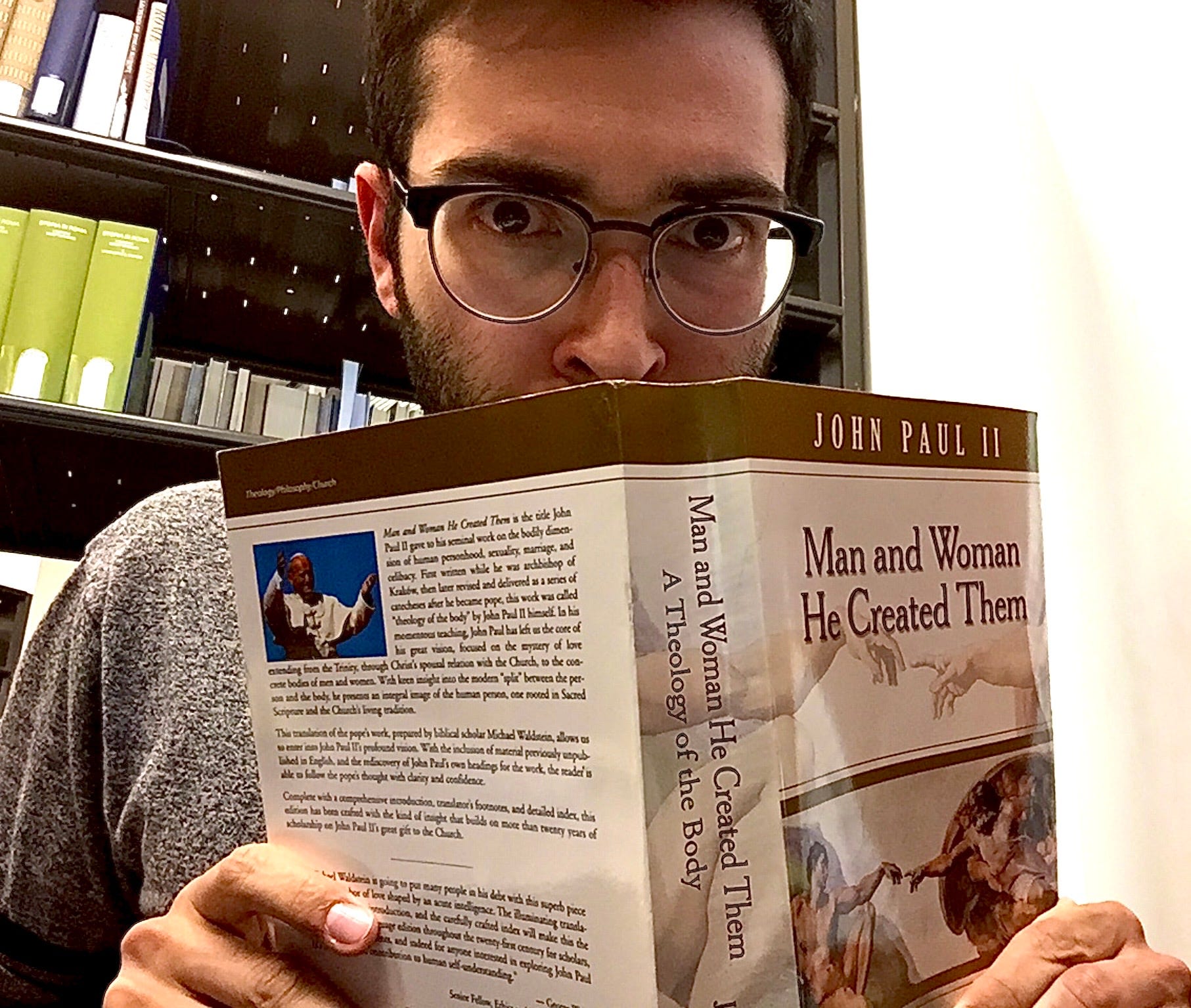
I entered college full of existential and spiritual questions. My public school teachers and bourgeois culturally-religious family members were always dismissive of my questions, telling me to just be a good person and be myself…and to get into a good college so I could get a good job so I could make a decent amount of money so I could live a comfy bourgeois life—and then die.
The first time anyone took my questions seriously was in my first required theology and philosophy classes. I felt like I could finally breathe when I was in these classes. I found out that the professor of the theology class was an Anglican priest when I requested to meet him for office hours—he said he didn’t have an office since he was an adjunct, so he asked me to meet him at his “main office”: Grace Episcopal in the East Village. Wasn’t sure why he kept it a secret from us, but I guess it made students feel less intimidated and more open to his class.
When I told him I was seeking God and didn’t know where to start, he told me to practice whatever religion I was raised with seriously. I then asked him what he thought about me studying theology. He said that’s an option, but more important I practice my religion seriously.
Eventually, I entered (back) into communion with the Roman Church…and found a very supportive community in which to live my faith. But I still felt the itch the continue studying religion in a formal way. I understood that the community helped me to live my faith, but I still wanted to understand it on a deeper level.
As a spergy nerd, I couldn’t help but want to know everything about religion on an intellectual level. Having been plagued by so many questions all my life without any outlet to explore them, I couldn’t help but choose Religious Studies as my major.
Yes, a part of me hoped that my studies would bring me closer to God. But I did understand that the main way to know Him was via communal life, whereas my studies would only help me know about him on a more conceptual level.
Just for context, I was one of those kids who had his head in the clouds (in case you couldn’t tell). My dream job shifted constantly, from wanting to be a fashion designer, to a boxer, to a news anchor, to an interior designer. I entered college as a marketing major, and quickly dropped it realizing I was no business man. I considered doing Communications and African/African-American Studies. Then I finally opted for Religious Studies and Spanish Language/Literature.
My family didn’t really care that I picked two useless majors (well, Spanish is actually quite useful tbh). They told me to do whatever “made me happy”…which was easy for them to say since our family was quite financially comfortable, so they weren’t really worried about me choosing a major that would lead me to a lucrative career path.
And ultimately, I chose Religious Studies over Theology because at Fordham, the course offerings were the same, the only difference was the requirements: RS allowed me to take more courses about religions other than Christianity, which is the main reason I picked it.
I ended up getting to graduate early thanks to AP classes and 2 summer Italian classes I took, and decided to look for jobs in secondary ed. I had taught ESL one summer and loved it…and besides, what other job could I apply for with my 2 useless majors? I ended up teaching religion and Spanish right after undergrad at the ripe age of 21.
I decided to enroll in an education program to get my MAT and NJ certification to teach secondary ed with a specialization in Spanish. But after 2 classes—both of which were utter BS—I dropped the masters program and applied to study theology at Seton Hall’s seminary.
I knew my decision wasn’t practical. But as a privileged suburban snowflake, I really believed my parents when they told me to be myself and do what makes me happy. Being practical doesn’t make me happy. So I didn’t care that a theology degree would be utterly useless. And not only was my family not upset about my decision, but they also offered to pay for my masters program.
Ultimately, I couldn’t shake the desire to delve deeper into my intellectual questions about God, religion, and culture/society. Thus, I just had to continue studying theology/religion.
At the end of the day, I don’t regret my imprudent decisions. It fed my intellectual hunger. In some ways, yes, it did bring me closer to God (but not in the same way belonging to a Christian community has). And yes, it made me very HAPPY.
But I do acknowledge how imprudent they are. And it’s my hope that other young people who want to study theology understand what they’re getting themselves into when they study theology, and how imprudent the decision is.
I see these young pious kids who really think studying theology will bring them closer to God. Again, it can do that. But God is found—above all—in reality. You can get close to God studying Spanish, or Engineering, or Marketing, or African-American Studies, or Medicine, or Law, or Speech Pathology, or Secondary Ed. Every discipline can lead you closer to God. He doesn’t only exist in theology and philosophy classes. We are not Gnostics…we believe in the Incarnation.
My other fear with this line of thinking is that studying theology becomes an excuse for you to be incompetent. Rather than having to learn a real subject and function in the real world, you study the “queen of the sciences,” the most holy discipline. Again, I say this because this is what I did (and still do). I hid behind having studied theology, trying to escape from the problem of my incompetence. When the reality is the more you learn about the real world and how to function in it, the closer you get to God. Learning the technical details of lesson planning and editing an article has brought me a lot closer to God than studying Aquinas [bc he’s boring] or De Lubac. So this is another pitfall to watch out for.
The other is what I mentioned before: that your main way of growing closer to God should be through participating in an intentional community—preferably an ecclesial lay movement like Focolare, CL, Neocats, Sant’Egidio, Con-solatio etc, or a parish run by a religious order.
Lastly, it will be really hard for you to get a job. If you’re a lay person who plans on starting a family, it will be hard for you to support them with a job as a high school religion teacher or college theology professor—that is, if you even get one of those positions.
You should only study theology if you come from money and can rely on your rich family for support, or if you plan on pursuing a religious/consecrated vocation, or if you double major and pick something more practical [than Spanish literature].
But at the end of the day, the main criterion to follow is whether God is asking you to study theology. If He is, then you better do it. Throw everything I just said out the window, and let Him take care of it all.
I still believe it was imprudent for me to study theology, but I don’t regret it, because I’m quite certain it’s what God wanted me to do. And again, it made me very HAPPY.
The other 15% is from my concern that their immature tendencies will become “the norm,” the standard for a mature faith. Back when being a young trad was outside the norm, it was much more common for normal people to correct my self-referential expressions of devotion. But now that there are so many of them, they run the risk of setting a new standard…which we can’t have. We have to maintain a small quota
Reading this while going back to grad school at 37 for my MThS (then going for the PhD) in Theology, and you’ve got great points. Academic Theology is academia which I think a lot of young people don’t realize. All the problems facing a literature or history PhD go for the Theologian. Shrinking budgets, fewer job openings… moving around for post-docs etc... For me, I’m blessed to be in a family situation where this makes logistical sense. (Doctoral stipend Academic spouse w/ potential for eventual spousal hire in 7 years). I love the world of academic theology, but it’s mass, the rosary, the sacraments, relationships that bring us closer to God. I’d say to anyone who isn’t serious about entering academia to go get the book list from a Theology department website and start reading.
mostly agree, though i’m glad i read augustine. i can’t imagine anyone not benefitting from that, whatever their degree of belief or unbelief.