

Get 50% off an annual subscription!
As much as I’m embarrassed to admit it, I can’t deny my obsession with MTV’s most-watched reality series Jersey Shore. Known for the wild partying and other debaucherous antics of its cast members, the series lasted for six seasons and spawned numerous spinoffs including Jersey Shore: Family Vacation, whose eighth and final season ended just this week.
I’ll always remember spending Friday mornings in AP Calculus as a high school senior back in 2009 rehashing what went down on the last episode of Jersey Shore the night before. To us, the cast members were deific figures. Sure, they may have been glorifying activities and ideals that were far from godly—diabolical even, but we couldn’t help but feel that they were somehow larger-than-life…at least larger than our very humdrum, cookie-cutter, rootless suburban lives.
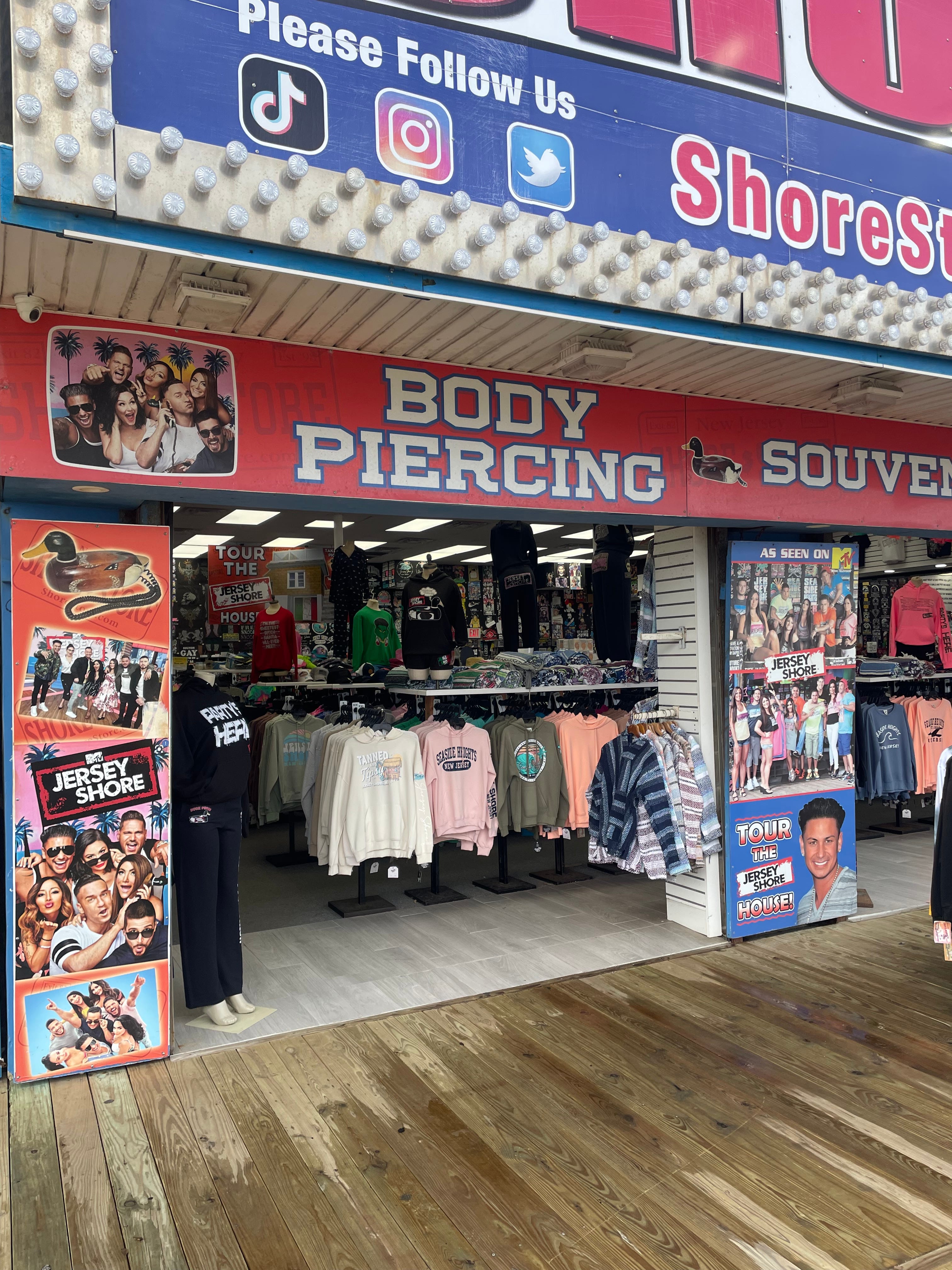
And while the rest of our classmates attended the customary trip to Seaside Heights (where the series is filmed) after graduation—a bacchanal involving renting a cheap, dirty house, drinking and doing drugs, “smooshing,” and then making a run for it when the cops show up—I hosted an alternative, classier graduation trip to the shore. I invited a select group of friends to stay at my family’s shore house, a mere Vodka bottle’s-throw from Seaside, and took them for a Jersey Shore tour: from the MTV house, to Karma, to the Shore Store, to the bar where Snooki got punched in the face.
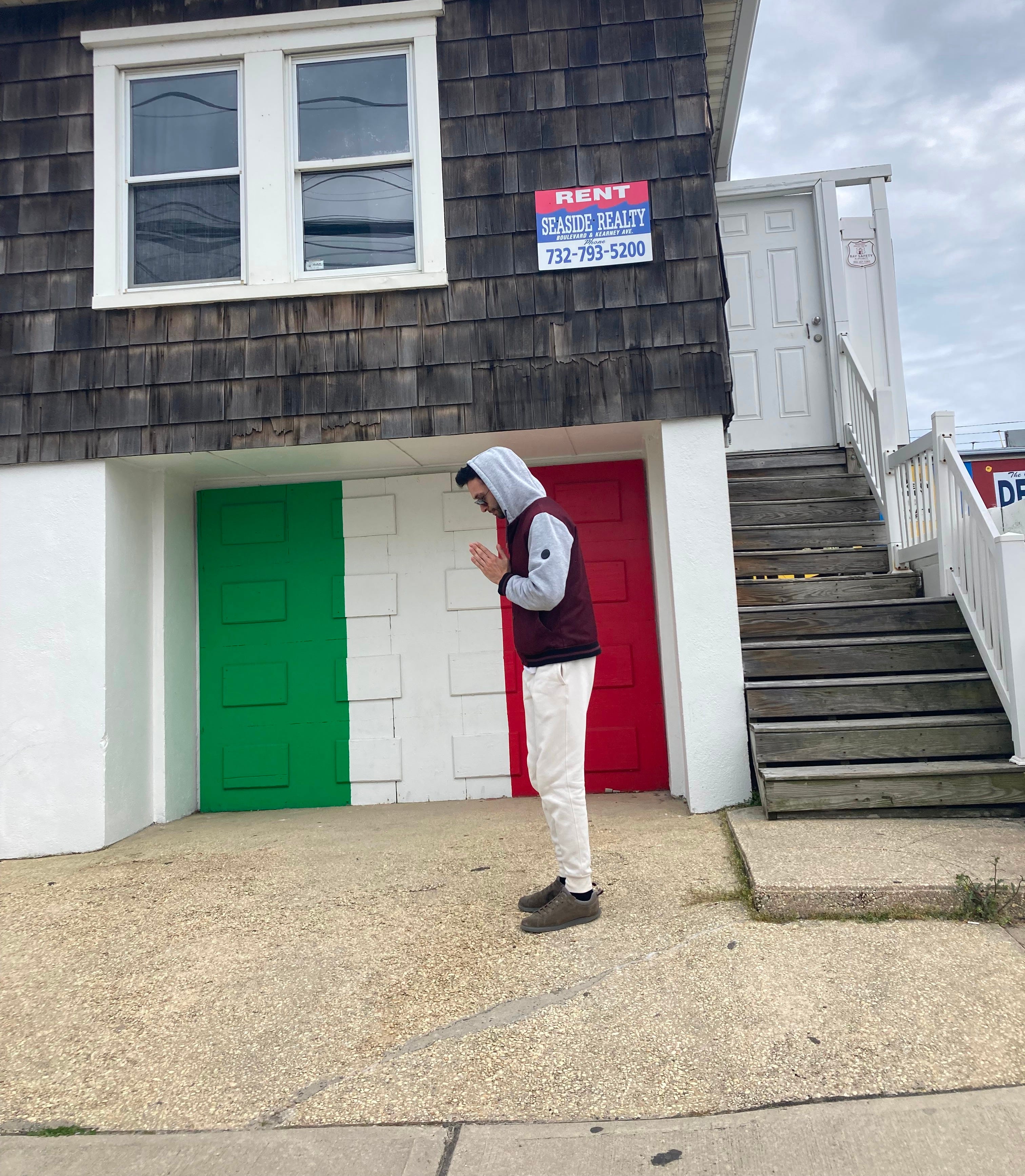
Even to this day, I have been known to drag my friends on “pilgrimages” to the house in Seaside, forcing them to take selfies with me “fist-pumping” in front of the Italian flag painted onto the garage. I’ve also been known to offer dance tutorials for the “Jersey Fistpump” at parties and to randomly reference memorable lines from the show like “come at me, bro!”, “party’s here!!”, and “shut your mouth, you dirty little hamster!!!”
The series is the dictionary-definition of a guilty pleasure. Yet I’ve found while watching—and re-watching—it over the last seventeen years since its release that it has an underappreciated depth. Sure, it promotes reckless hedonism and perpetuates stereotypes about “trashy” Italian-Americans, but the series reveals something fascinating, perhaps even beautiful, about the characters and the culture they come from.
A snapshot of the Italian diaspora
Among the major objections to the series was its perpetuation of negative stereotypes about Italian-Americans and Jerseyites. Of course, this is nothing new: other TV series and films that featured the morally-questionable antics of Italian-Americans like The Sopranos, Real Housewives of New Jersey, Mob Wives, The Godfather, and Goodfellas have been the objects of such criticism. Others pointed out that on top of the representation being negative, it was also inaccurate—not all of the cast members were Italian, or from New Jersey. Several were only half Italian, Italian by adoption, or not Italian at all, and only Mike, Sammi, and Deena were from New Jersey.
But the fact that not all of the cast members are fully Italian or from Jersey opens up an important discussion about the nature of the Italian diaspora in the US.1 The fact that Ronnie is half-Italian half-Puerto Rican, JWoww is mostly Irish (and not Italian at all), and Snooki was born in Chile but mainly identifies with her adoptive-parents’ Italian heritage speaks volumes about the nature of Italian identity in the American Northeast.
Despite having had tensions with Irish and Puerto Ricans in the past, Italians largely embrace them as “one of us” nowadays, to the point that there is a great deal of intermarriage between Italians and Irish (especially in suburbs, to which Italians and Irish flocked after “making it” out of their urban ethnic enclaves, where the tension between the two was more pronounced), and between Italians and Puerto Ricans (especially in the Bronx—where Ron is from, Brooklyn, and Newark).
And I’ve met countless Latinos adopted—and fully embraced—by Italian families, like Snooki. Besides, the porousness of Italian identity is bolstered by the fact that most non-Anglo ethnics will—out of a desire to avoid completely assimilating—attempt to emulate either black or Italian cultural stereotypes.
Also, Snooki is cracks in pomo’s main contender for an alternative to Columbus Day (right next to Cabrini…forget about the globohomo co-opting of “Indigenous People”).
Wildean trash looking up at the stars
But what of the claim that the Jersey Shore cast members—with their mixed heritage, hailing from Italian diasporic communities—are perpetuating negative stereotypes? The unavoidable fact is that yes, they are severely, painfully, scandalously trashy. They represent the excesses of the American Dream, the nihilism of neoliberalism, the dead end of consumerism and the death trap that is bourgeois individualism. Their hideous, hedonistic lifestyles, their grossly artificial fashion sense, their taste for instant gratification is emblematic of what this nation and its ideals does to the dignity of the roots, legacy, and tradition that immigrants bring along with them—which is to process them through a meat-grinder, desiccating and destroying them beyond recognition, all in the name of affording their posterity to someday have the freedom of getting to live their “best lives”: a life devoid of friction, discomfort, and external constraints…but also devoid of dignity, meaning, and hope.
And yet, as trashy, nihilistic, and undignified as the Jersey Shore cast members may be, they are also much more than this. They are Wildean2 trash stuck in the gutters of the American Dream, looking up at the stars—that is, who maintain some tension of sorts with the beauty, the dignity, the glory of their Italian roots. The meat-grinder may have distorted their heritage, turning it into something quite distinct—and less dignified—than that of their ancestors (as evidenced by their trip back to the motherland), but it did not succeed in obliterating their roots completely. The process of assimilation started to run its course, but they managed to bring it to a halt midway. It did not totally annihilate the spirit of the particular. The roots remain, albeit in a bastardized form. They successfully steered clear from being morphed into non-descript, flavorless “white” people—in either the bourgeois suburbanite or white trash iterations.
They fought against the suffocating spirit of the suburbs and emerged alive, if not triumphant—with muscles, poofy hair, spray tans, hot temper, zest for life, and accents intact. They still respect the sacredness of the Sunday dinner and start it off with grace (even if they drop f-bombs in the middle of it). They attempt to learn Italian while visiting the motherland (even though they could barely pronounce anything).
Even GTL is a remnant of sorts of the Italian cult of beauty; their attention to aesthetics faintly echoing the art of fare bella figura. The swamp of Anglo-American hedonism, individualism, and careerism did not totally swallow the spirit of tradition and southern Italian cult of family in them, as evidenced by the fact that nearly all of them got married and had children fairly young…not to mention their maintenance of distinct gender norms (take Snooki, who in the first episode proudly proclaims that she wants a big, muscly, tanned “juicehead,” which is to say, she has no interest in a neutered, wimpy soyboy).
I belong, therefore I am
For a half-Italian boy like me stranded in the deracinated suburbs, this bastardized representation of my people was better than no representation at all. My town was full of assimilated Italians, Irish, and Jews, with only a small smattering of blacks and Latinos. The only identifiably ethnic elements in our school was when the Irish girls danced for us on St. Patrick’s Day, when everyone would circle around the black kids to watch them dance with great skill to Ciara or Lil Jon songs at the school dances and Sweet 16s, and when the Jewish kids hosted lavish Bar/t Mitzvahs.
For the rest of us, there was no way to publicly claim or share our roots, our belonging to a people greater than ourselves. Thus, Jersey Shore represented the chance to say in front of everyone, “these are my people…this is what I belong to.” No, I was not a juiced-up guido with a hot temper and heavy accent. But they were my people nevertheless.
They represented the lineage I came from: the pipeline from Italy, to an ethnic enclave in an American city, to a nondescript suburb. While everyone also looked down upon them for representing negative stereotypes of Italian-Americans, I applauded them for representing a recognizable stereotype of Italian-Americans.
As Jersey Italian TV shows proliferated, they fanned the flame of my pride not only in being Italian-American, but also in being from Jersey. This only served to strengthen my hope that maybe I was not a rootless, atomized individual with no story, with nothing to belong to, after all. The stifling air that was the promise of being “whoever you want to be” with no ties to anything particular—which translated to the curse of being nothing and no one in particular—that I was forced to breathe in was alleviated by my being able to identify with the stars of these shows.


It became a point of pride to say I saw Melissa Gorga at a gift shop in Lavallette, that my step-mother hung out with friends of Teresa Giudice back in the day, that your friend goes to same bar as Caroline Manzo’s sons in Hoboken, that I was going to Christmas dinner at Lunello’s and sat at a table in the same room where Teresa flipped the table. And don’t even get me started about boasting about all the Soprano’s sites I’ve been to.
Further, there’s a simpler reason I can’t help but keep watching Jersey Shore: I have fallen in love with the cast members. Sure, I know reality TV is all scripted. That the characters we see are artificially cooked-up and meticulously managed by the elites working in Viacom’s corporate boardrooms. I know it’s all a simulation, and that even an AI-written essay or a BBL is more real than what goes down in each episode. Yet, I can’t help but feel—or hope—that something of their real personalities have indeed emerged through the artificial matrix of the reality TV industrial complex in which they are trapped.
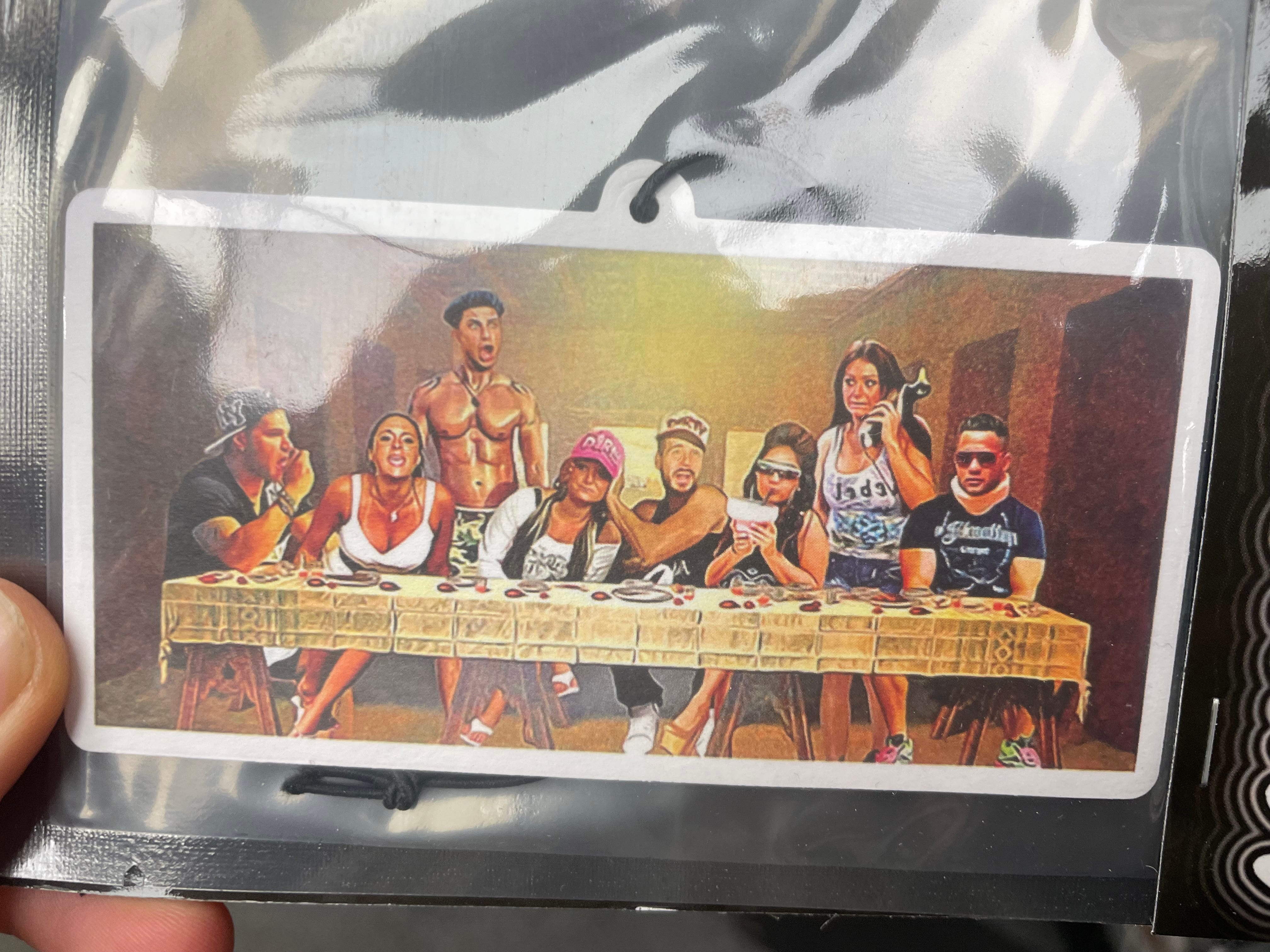
There is something severely endearing about each character, to the point that they feel like family. Maybe I’m just a sucker…I’ve been successfully duped by MTV’s expert, metrics-driven script writers. But how can you not love Snooki, a little meatball packed full of alcohol, a little bit of Latinx spice, and loads of fun; Pauly D, with his Sonic The Hedgehog hair and tension-breaking humor; JWoww’s ride-or-die spirit, who in one moment has got your back in a fight and in the next will “chop your fucking head off”; Mike’s redemption arc from asshole, to addict, to dude humbled by his recovery; Sam and her toxic attachment to Ron…and Ron’s toxicity; Angelina for keeping up the persona of the villain the whole series-through; Deena for her bicurious, benevolent energy; and of course, Vinny, perhaps the most fascinating, most real cast members…with his complex personality (is he secretly actually very smart? Also a little gay?), his proximity to his Italian roots thanks to his mom (with whom he is enmeshed in a classical Italo-Freudian Oedipal Complex), whose post-series career actually has a semblance of substance, and the only one who has yet to get plastic surgery.
They are indeed trash, but they are also stars. They are my stars, whom I will never stop loving, and praying for. I am sad that the series is now officially ending—even if it’s been dragged on for way too long. But the grandeur of their memory—and of binge-watching YouTube compilations—will live on into eternity.
The nature of Italian identity and stereotypes is further complicated by regional and class differences. Take Italians who live in the suburbs of Newark, New Jersey. Much of our identity is predicated on being forged in the crucible of the tough streets of Newark, where people started businesses from nothing, had to navigate whether or not to make deals with mobsters, eventually made enough to move to the suburbs—and were in fact “forced” to do so by the racial riot/rebellion (depends who you ask) of 1967. Thus, ex-Newark Italian (there are barely any Italians left in Newark other than my grandma) identity is largely shaped by being tough, enterprising, aspiring toward upward mobility and providing their kids a safe and comfortable upbringing (unlike theirs), and resentment toward blacks for “what they did to the city” and forcing them to leave (and thus, are quite racist).
And then there are the ex-Newark Italians (like my family members) who pride themselves on NOT being like the other ex-Newark Italians: unlike them, we’re civilized, we’re enlightened…which is to say we are educated, we are not racist or homophobic, we don’t beat our wives or sleep around, and we have absolutely no ties to the mafia at all. We see a similar tension play out in the Sopranos between the likes of Dr. Cusumano and Dr. Melfi and Tony and his ilk.
Italian identity plays out differently in other Northeast enclaves, as it is shaped by their respective socioeconomic dynamics. For example, Philly Italians never faced race rioting and are known to have better relationships with blacks. Bronx and Brooklyn Italians are shaped by their friction with blacks, Puerto Ricans, Dominicans, Chinese, Albanians, and now gentrifying yuppies, and by their subsequent exodus to Westchester, Long Island, and Staten Island.
Staten Island Italians are, for that matter, truly a breed of their own, living in what has become a suburban yet not-fully deracinated bubble—a true microcosm (more on this to come). The rural settings and agricultural work of Upstate Italians have made them markedly different from urban Italians (take Paglia, for example). And Rhode Island, Connecticut, Massachusetts, and Florida Italian-Americans are a whole other story.
“We are all in the gutter, but some of us are looking at the stars.”
―Oscar Wilde, Lady Windermere’s Fan
Deeeply resonates. Thursday nights were sacred bc of this cast. These words helped shed light on why I nearly felt "proud" watching it all those years.